Six guided directives · Start any time

The Room Within

A textile design studio for quilters who can already sew and now want to make work that is unmistakably theirs — including experienced makers ready to stretch beyond patterns into their own designs. Six directives at your own pace, about a week each, with a live gathering every Wednesday evening to ask about techniques, share finishes, get coached, or simply sit and sew alongside everyone.

From CAD $347 · Two-payment plan available

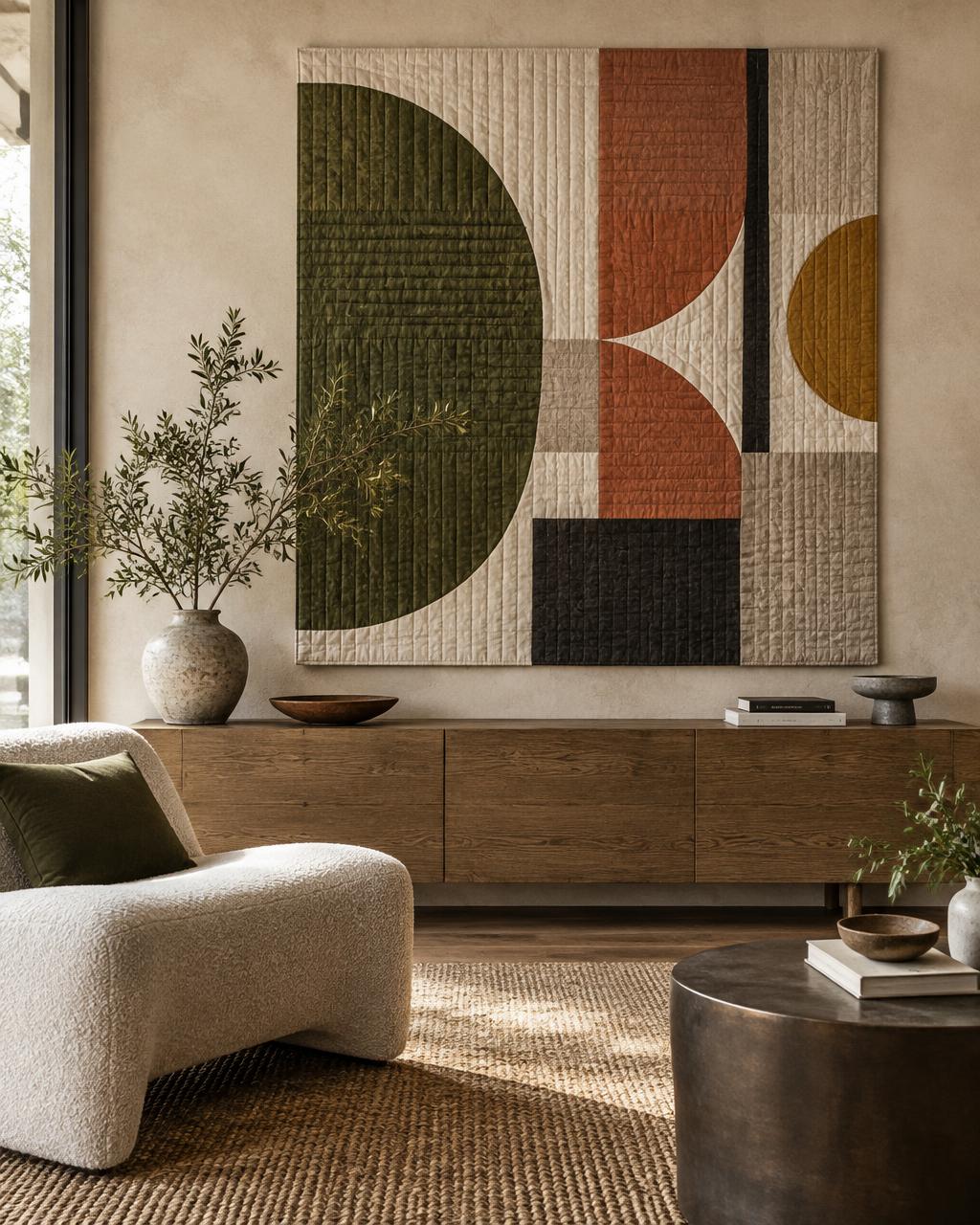
A contemporary quilted fibre artwork displayed in a warm, thoughtfully furnished room
Directive one begins at the threshold of your own room

Before you decide

This is for you if…

  • You can sew, and you quietly suspect your work could say more than it currently does.
  • You have followed patterns faithfully and now want to make something that is yours.
  • You are an experienced quilter whose technique is solid — and you want your ideas to catch up with your hands.
  • You have years of skill and a cupboard of beautiful finishes, yet designing your own work still feels like someone else's territory.
  • You want a design practice, not another finished project to store in a cupboard.
  • You work best with a clear design directive and a room of people doing the same thing.
  • You want thoughtful feedback rather than applause.

What this is not

  • Not a pattern club. You will not receive templates to trace.
  • Not a beginner sewing course. Basic piecing is assumed.
  • Not a re-teaching of skills you already have. Experienced quilters expand here; nobody starts you over.
  • Not a critique arena. Nobody ranks your work here.
  • Not a content dump. Six directives, nothing padded.
  • Not a race. You set the pace, and each directive opens as you finish the one before.

The shape of a week

How the studio works

Five movements, repeated six times. Nothing else to keep track of.

  1. Step One

    You enter the room

    Enrol any time. The studio opens straight away with a welcome, a supply guide, and Directive One waiting.

  2. Step Two

    A new stimulus arrives

    Each directive begins with a room — an image, a light condition, a texture — to work from rather than a pattern to copy.

  3. Step Three

    You receive one directive

    A single plain-language instruction. Small enough to start today, open enough to surprise you.

  4. Step Four

    You make, then reflect

    You sew, photograph, and write a short private reflection in your Room Journal. Sharing with the others is always optional.

  5. Step Five

    We gather every Wednesday

    One open gathering a week, whatever week you are on. Bring whatever is on your mind: getting started, a technique question, a finish you want to share, or a coaching ask. Lurking is welcome too — cameras and speaking are always optional.

The curriculum

The six-directive journey

Each directive opens with a room to work from and closes with one directive.

01The ThresholdMake a block that feels like an invitation.

The room

A doorway left slightly open. Light spilling onto a floor. The moment before you walk into a room.

The lesson

Every design begins with an entrance. This week we look at how a quilt block can welcome the eye instead of demanding it. We talk about openings, thresholds, and the difference between a design that announces itself and one that invites you closer.

The making

Work small. One block. Choose two or three fabrics that feel like the moment of arrival, and build a shape that opens rather than closes.

If you feel stuck: photograph a doorway in your own home, print or sketch it, and translate only its largest three shapes into fabric. Nothing more.

02Light and ShadowMake a block that feels like light moving across a surface.

The room

Late afternoon sun crossing a wall. The soft grey underside of a folded sheet. Value before colour.

The lesson

Value does the structural work in textile design; colour gets the credit. This week we separate the two so you can see how light travels through a composition and where it rests.

The making

Build a block using a single colour family and at least four distinct values. Let the lightest passage sit where you want the eye to land.

If you feel stuck: photograph your fabric pull in black and white. Remove anything that disappears into its neighbour.

03Structure and RhythmMake a block using repetition and one deliberate interruption.

The room

Floorboards. A row of fence posts with one missing. The pause in a piece of music you remember.

The lesson

Repetition builds trust with the viewer. Interruption is how you say something. We look at rhythm as a design tool and practise placing a single break with intention rather than apology.

The making

Repeat one simple unit across the block. Then interrupt it exactly once — in scale, direction, or colour.

If you feel stuck: cut eight identical units, lay them out, then change only one. Trust the smallest change first.

04Surface and TouchMake a block that makes someone want to touch it.

The room

Linen after washing. A worn wooden handle. The seam allowance of an old quilt pressed open by hands.

The lesson

Textiles are the one design discipline people want to hold. This week we work with texture, hand, and stitch density — the qualities a photograph can only hint at.

The making

Introduce contrast in texture rather than colour: mixed fibres, visible stitch, a quilted passage against a flat one.

If you feel stuck: close your eyes and sort your scraps by feel alone. Build with the three you kept returning to.

05Colour ConversationMake a block that has a conversation with the room.

The room

The wall behind your sewing table. The colour of your floor. A chair you have owned for years.

The lesson

Colour is relational. A palette that sings in a shop can go silent in your living room. We build palettes from the space the work will live in, not from a chart.

The making

Choose three colours from the room you are sitting in and one colour that politely disagrees with them.

If you feel stuck: photograph the room, blur the image, and pull your palette from the blurred shapes.

06Scale and PlacementChoose one idea and give it room to become larger.

The room

A small drawing pinned to a large wall. The difference between a sample and a statement.

The lesson

Scale is a decision, not a consequence. In this final week you choose one idea from the previous five weeks and let it grow — in size, in ambition, or in the space you allow around it.

The making

Enlarge one earlier block, or set it inside far more negative space than feels comfortable. Photograph it in the room it is for.

If you feel stuck: pin your favourite block to the wall, step back six feet, and mark with tape how big it wants to be.

Included

What you receive

  • Six studio directives: stimulus, lesson, directive, and making prompt.
  • A live Wednesday gathering for as long as you are in the studio — ask about techniques, share finishes, get coached, or simply sit and sew alongside everyone.
  • A private Room Journal for reflections, photographs, and prompt responses.
  • Printable room cards and journal pages for the wall beside your machine.
  • A supply guide written for what you already own.
  • A quiet studio community with thoughtful reactions instead of likes.
  • A place in the closing Your Finished Work gallery.
  • A plain-language glossary of every design term used.

Six directives later

The shift

Nothing about your machine changes. How you decide does.

Before

After

You wait for the right pattern.

You begin from an idea and a directive.

You choose colour from a chart.

You choose colour from the room.

You finish projects you cannot explain.

You can say what a piece is doing and why.

Decades of skill, other people's designs.

Decades of skill, finally your own.

Feedback feels like judgement.

Feedback becomes useful noticing.

You make blocks.

You make decisions.

Your guide

Brandon Wulff

Textile designer · Founder, The Quilt Hub

I design quilts the way other people design rooms: beginning with light, structure, and the feeling of walking in. For years I taught technique — accurate points, flat seams, tidy backs — and watched capable makers still hesitate when asked what their work was about. The most experienced quilters were often the most hesitant: decades of skill, and still someone else's design on the wall.

The Room Within is the course I wanted then. It teaches design in plain language, one directive at a time, with no jargon and no ranking. My job across the six directives is to give you a good room to work from, ask a useful question about what you made, and get out of the way.

I read every reflection shared with me, and I answer at the Wednesday gathering.
Enrolment

Choose how you enter

All tiers include all six directives. Prices in Canadian dollars.

Standard Studio

Most chosen

CAD $347

one payment

The full studio of six directives, weekly gatherings, journal, community, and closing gallery.

  • All six directive releases
  • Weekly Wednesday gathering — ask, share, lurk, sew
  • Private Room Journal
  • Studio community access
  • Your Finished Work gallery place
Continue with Standard Studio

Studio + Portfolio Review

CAD $547

one payment

Everything in Standard, plus a private written review of your six directives.

  • Everything in Standard Studio
  • A private one-to-one portfolio review with Brandon
  • Written notes on direction and next steps
  • Priority placement in the closing gallery
Continue with Studio + Portfolio Review

Two-Payment Plan

CAD $179 × 2

today, then in 30 days

The Standard Studio, split across two payments.

  • Everything in Standard Studio
  • Second payment taken automatically after 30 days
  • Full access from the first payment
Continue with Two-Payment Plan

Full refund within fourteen days of enrolling, no explanation required. The Quilt Hub member rate appears only after you sign in through the member page.

Questions

Before you enrol

How much time does each directive take?

Plan for two to four hours. The directives are designed to be finished at a small scale, so a single evening is enough to make something real.

Do I need to attend the live gatherings?

You are welcome at every Wednesday and missing one costs you nothing. The gatherings are live only and never recorded, so everyone can share openly. Bring a getting-started question, a technique ask, a finish to share, or just come to listen. If you cannot come, write to Brandon and he will gladly catch you up.

What skill level is assumed?

Comfortable, confident piecing. If you can make an accurate block and press a seam, you are ready. And if you have been quilting for years, this studio was built with you in mind: your technique is the foundation, and the directives stretch the design thinking on top of it. Many of our most surprised students are the most experienced ones.

What supplies do I need?

Your machine, your existing fabric, and a wall or floor to look at work on. The supply guide is written to use what you already own.

Is my journal private?

Yes. Room Journal entries are visible only to you. Sharing to the studio community is a separate, deliberate choice each time.

I already have a Quilt Hub account. Do I need a new one?

The studio keeps its own accounts. Quilt Hub members use the Enter The Room Within button on their member page — it signs you in here with no new password, and your member rate appears automatically.

Can I pay in two instalments?

Yes. A two-payment plan is offered at enrolment, with the second payment taken thirty days later.

What if it isn't right for me?

Write within fourteen days of enrolling and we will refund you in full, no explanation required.

Still wondering about something? Write to hello@thequilthub.com and Brandon will answer you himself.